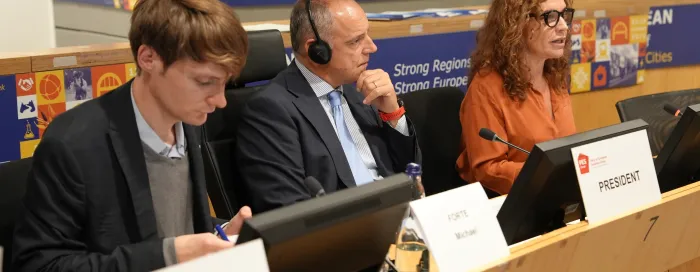
Europe’s green industrial transition must strengthen competitiveness while delivering quality jobs, social justice and opportunities in every region. This was the central message of the PES Group meeting in the European Committee of the Regions on 13 October, held in the context of the Plenary and the European Week of Regions and Cities.
The debate, featuring S&D MEP Lina Gálvez and Michael Forte, Senior Policy Adviser at E3G, explored what the EU can do to accelerate industrial decarbonisation while ensuring that workers and territories benefit from the transition.
The lively discussion highlighted a shared progressive vision of Europe’s industrial transformation: one that combines innovation and decarbonisation with social progress. Public investment must deliver quality jobs, protect workers’ rights, and strengthen collective bargaining. This means giving workers a voice in shaping industrial change and investing in training and reskilling even before restructuring puts jobs at risk. Gender equality must also be part of this vision from the outset, with access to green skills and apprenticeships, alongside affordable childcare and care infrastructure, ensuring that women can fully benefit from the opportunities created by the green transition.
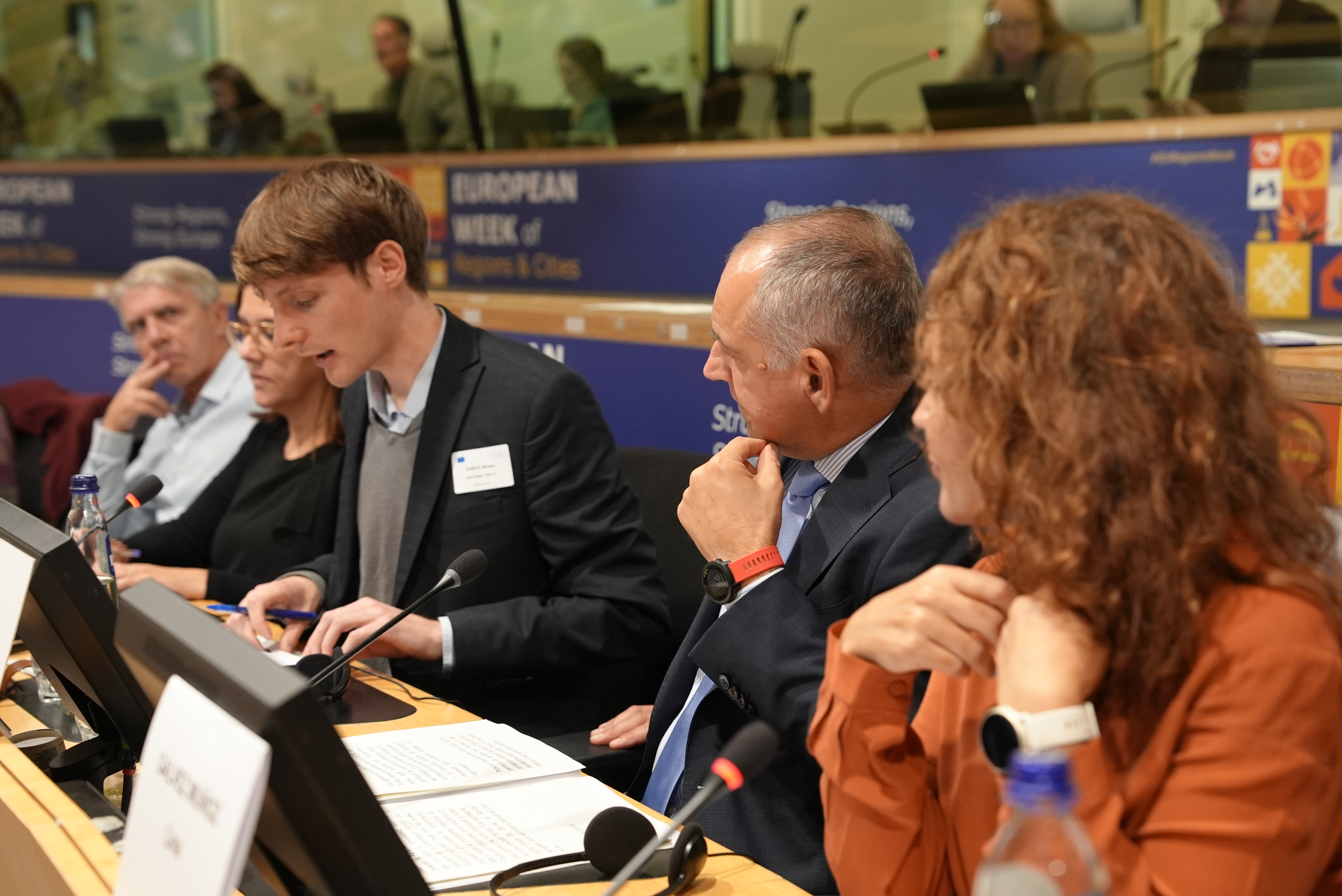
PES Group Members stressed that Europe cannot afford a transition in which opportunities depend on the financial capacity of individual Member States. A strong cohesion policy and common EU investment are essential to prevent regional inequalities from widening. Cities and regions are already helping to turn European ambitions into concrete action by connecting businesses with research, developing infrastructure and innovation eco systems, and preparing the workforce for new industries. They need adequate funding, capacity and a meaningful role in decision-making to fulfil this potential.
The discussion underlined that protecting cohesion policy and the European Social Fund from cuts and renationalisation is not only a matter of solidarity, but also a condition for Europe’s long-term competitiveness. An ambitious EU budget must support innovation and industrial transformation while strengthening social and territorial cohesion. Europe’s industrial future depends on its ability to mobilise investment, develop skills and give every region and every citizen a fair chance to adapt and prosper.
The progressive ambition is clear: a green industrial Europe that strengthens workers’ rights, advances equality and shares prosperity across all territories. Europe will be more competitive when its transition works for people and leaves no region behind.