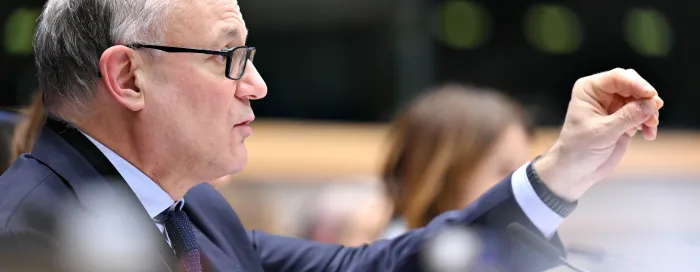
Public procurement represents around 14% of the EU’s GDP, and local and regional authorities are responsible for nearly half of this spending. As the European Commission prepares to revise EU procurement rules in 2026, Roberto Gualtieri, the Mayor of Rome, led the European regions and cities' call for a simpler framework that allows public spending to better support quality jobs, sustainability and Europe’s resilience.
Beyond the lowest-price logic: Simpler rules, better outcomes
During its plenary session on 4 March, the European Committee of the Regions successfully adopted an opinion prepared by Roberto Gualtieri, Mayor of Rome. Members called for a clearer and less bureaucratic system so that local authorities can concentrate on delivering projects efficiently and achieving real results for citizens, while maintaining transparency and fair competition. Moving beyond the lowest-price logic, simpler rules would allow local and regional authorities to prioritise value-based procurement that supports innovation, sustainability and competitiveness.
“After years of overlapping rules, Europe has a chance to change course with simpler rules, so that every euro spent can become high-quality delivery for our citizens,” said Rapporteur Gualtieri.
Public purchasing as a strategic tool
Local and regional leaders also stressed that procurement should help strengthen Europe’s economic resilience and support key sectors such as energy and clean technologies. They highlighted the importance of ensuring that labour and sustainability standards are respected at every step in supply chains and subcontracting.
The CoR also underlined that smaller organisations, including SMEs and social economy actors, should face fewer barriers when taking part in public tenders. Members also noted that digital tools can improve efficiency and transparency, but should remain simple and practical, especially for smaller administrations.
___________
Read more in the press release issued by the European Committee of the Regions.