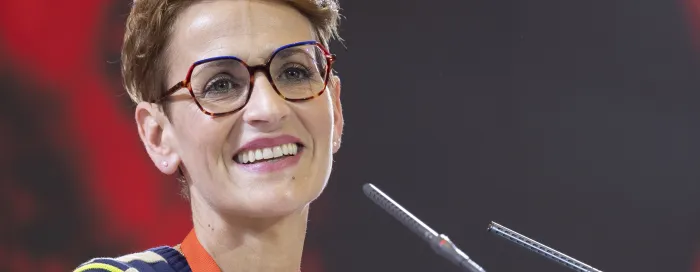
As Europe works to strengthen its industry and competitiveness, regions are key to driving investment, innovation and sustainable growth. In this interview, María Chivite, President of the Government of Navarra, shares her views on how regions can contribute to a stronger and more resilient European industry.
Europe is facing major challenges in terms of industrial competitiveness and global competition. What role can local and regional leaders play in strengthening Europe’s industrial capacity and ensuring that no territory is left behind?
ES- Las regiones y los entes locales somos clave en el desarrollo económico y social. Navarra es la región más industrializada de España aun siendo pequeña en extensión y población. Y es así por unas políticas públicas incentivadoras y una colaboración público privada eficaz. Desde el gobierno regional, hemos impulsado un ecosistema virtuoso de talento, impulso a la I+D+i, atracción de nuevas inversiones y contribución al mantenimiento de la industria ya existente desde el apoyo a la transformación digital y la descarbonización. Tenemos un sistema educativo público puntero en el que, por ejemplo, toda la formación profesional es dual y todo el alumnado tiene trabajo cuando acaba sus estudios. Nuestro sistema navarro de innovación que aglutina a todos los agentes, desde centros formativos y tecnológicos o empresas a la propia administración, que contribuye a alinear objetivos y crear sinergias y colaboraciones fructíferas. Además, estamos disponiendo ayudas para incentivar la innovación, la descarbonización y la inversión, y también tenemos incentivos fiscales. De manera que desde los recursos públicos hacemos un esfuerzo también económico para ayudar a las empresas y atraer nuevas inversiones. En definitiva, nuestras capacidades, como regiones, son clave para hacer un trabajo de proximidad, eficaz y desde la oportunidad que supone el conocimiento de nuestro entorno.
EN- Regions and local authorities are key players in economic and social development. Navarre is Spain’s most industrialised region, despite its small size and population. This is the result of supportive public policies and effective public-private cooperation. From the regional government, we have promoted a virtuous ecosystem based on talent, investment in R&D and innovation, the attraction of new investments, and support for maintaining existing industry through digital transformation and decarbonisation. We have a leading public education system in which, for example, all vocational education and training is based on a dual system, and all students have a job when they complete their studies. Our Navarre innovation system brings together all stakeholders, from education and technology centres and businesses to the public administration itself, helping to align objectives and create fruitful synergies and partnerships. In addition, we provide financial support to encourage innovation, decarbonisation and investment, as well as tax incentives. In this way, we also make an economic effort through public resources to support businesses and attract new investments. In short, our capacities as regions are essential to carrying out effective, local-level work and making the most of the opportunities that come from our knowledge of the specific characteristics and needs of our territories.
Strategic autonomy requires Europe to develop resilient supply chains and invest in key sectors. How can regions and cities contribute to building a more sustainable and autonomous European industry?
ES- En primer lugar, tenemos que identificar los sectores clave, y los que tienen potencial, de manera que pongamos los esfuerzos allí donde hay presente y futuro. En segundo lugar, tenemos que incentivar el arraigo para evitar deslocalizaciones que generen distorsiones en la industria y el empleo. En ese sentido, el Made in Europe puede ser una herramienta importante, pero desde las regiones tenemos también que hacer atractiva la inversión y la permanencia. De ahí la importancia de trabajar en clave de ecosistema y de cadena de valor. En Navarra lo hemos entendido así y es lo que estamos haciendo. Potenciar un ecosistema industrial e innovador y a su vez las cadenas de valor de las tres industrias con más peso, que son automoción, renovables y agroalimentación. Pero, además, tenemos una estrategia de especialización inteligente por la que tenemos identificados otros sectores con potencial en los que también trabajamos para hacerlos crecer y diversificar nuestro tejido productivo, para ser así más resilientes. Europa ha demostrado que sabe trabajar bajo los principios de talento y calidad. No debemos perder nuestra esencia. Si hacemos las cosas bien, con audacia y con agilidad, podemos recuperar la posición de liderazgo que hemos tenido en algunos sectores y posicionarnos en otros emergentes.
EN- First of all, we need to identify the key sectors and those with growth potential, so that we can focus our efforts where there is both a present and a future. Secondly, we need to encourage businesses to remain rooted in their territories in order to prevent relocations that can create disruptions in industry and employment. In this regard, “Made in Europe” can be an important tool, but regions must also make investment and long-term business presence attractive. This is why it is so important to work from an ecosystem and value-chain perspective. In Navarre, we have understood this and this is exactly what we are doing: strengthening an industrial and innovation ecosystem while also reinforcing the value chains of our three most important industries: automotive, renewable energy and agri-food. In addition, we have a smart specialisation strategy through which we have identified other sectors with potential. We are also working to help them grow and diversify our productive base, making it more resilient. Europe has shown that it knows how to work on the basis of talent and quality. We must not lose our identity. If we do things well, with ambition and agility, we can regain the leading position we have held in some sectors and establish ourselves in new and emerging ones.
From your experience in Navarra, what are the key conditions that local and regional governments need to attract investment, support innovation and create quality jobs in the context of Europe’s new industrial policy?
ES-Lo primero que necesitamos los entes regionales y locales es certidumbre normativa y una hoja de ruta clara. Europa no puede dudar ni tardar tanto en tomar decisiones estratégicas. Porque mientras Europa piensa, otros hacen. Y eso nos resta competitividad. También necesitamos un marco presupuestario que acompañe en Europa y que las regiones y entes locales tengamos más margen para activar ayudas e incentivos, porque somos las administraciones que mejor conocemos lo que necesita nuestra industria y a su vez las que podemos implementar con más agilidad esas ayudas o medidas. Y también tenemos que promover una cultura de la cooperación regional mucho más intensa. Tenemos que vernos unas regiones a otras como aliadas y no como competencia. Eso nos resta en lugar de construir un ecosistema europeo en el que todas las regiones podamos aportar nuestras capacidades y experiencias. La mejor manera de ser competitivos como proyecto europeo es entendernos así. Como proyecto común que beneficia al común. Por eso la perspectiva regional debe estar en todas las políticas europeas y Europa debe contar más con las regiones. Y como he dicho en las respuestas anteriores, talento, innovación y calidad son clave para que Europa sea atractiva para la inversión y el empleo. Y por supuesto, sostenibilidad, digitalización e igualdad deben guiar las políticas. EN machine translation
EN- First and foremost, what regional and local authorities need is regulatory certainty and a clear roadmap. Europe cannot afford to hesitate or take so long to make strategic decisions. While Europe is thinking, others are acting and that makes us less competitive. We also need a multiannual financial framework that supports these efforts, and regions and local authorities need greater flexibility to provide aid and incentives. We are the levels of government that best understand the needs of our industries and, at the same time, are able to implement this support and these measures more quickly and effectively. We also need to promote a much stronger culture of interregional cooperation. Regions should see each other as allies rather than competitors. Competition between us weakens us, instead of allowing us to build a European ecosystem in which all regions can contribute their capacities and experiences. The best way to be competitive as a European project is to see ourselves in this way: as a common project that benefits everyone. This is why the regional perspective must be reflected in all European policies, and why Europe must involve and rely more on its regions. As I said in my previous answers, talent, innovation and quality are key to making Europe attractive for investment and employment. And, of course, sustainability, digitalisation and equality must guide our policies.
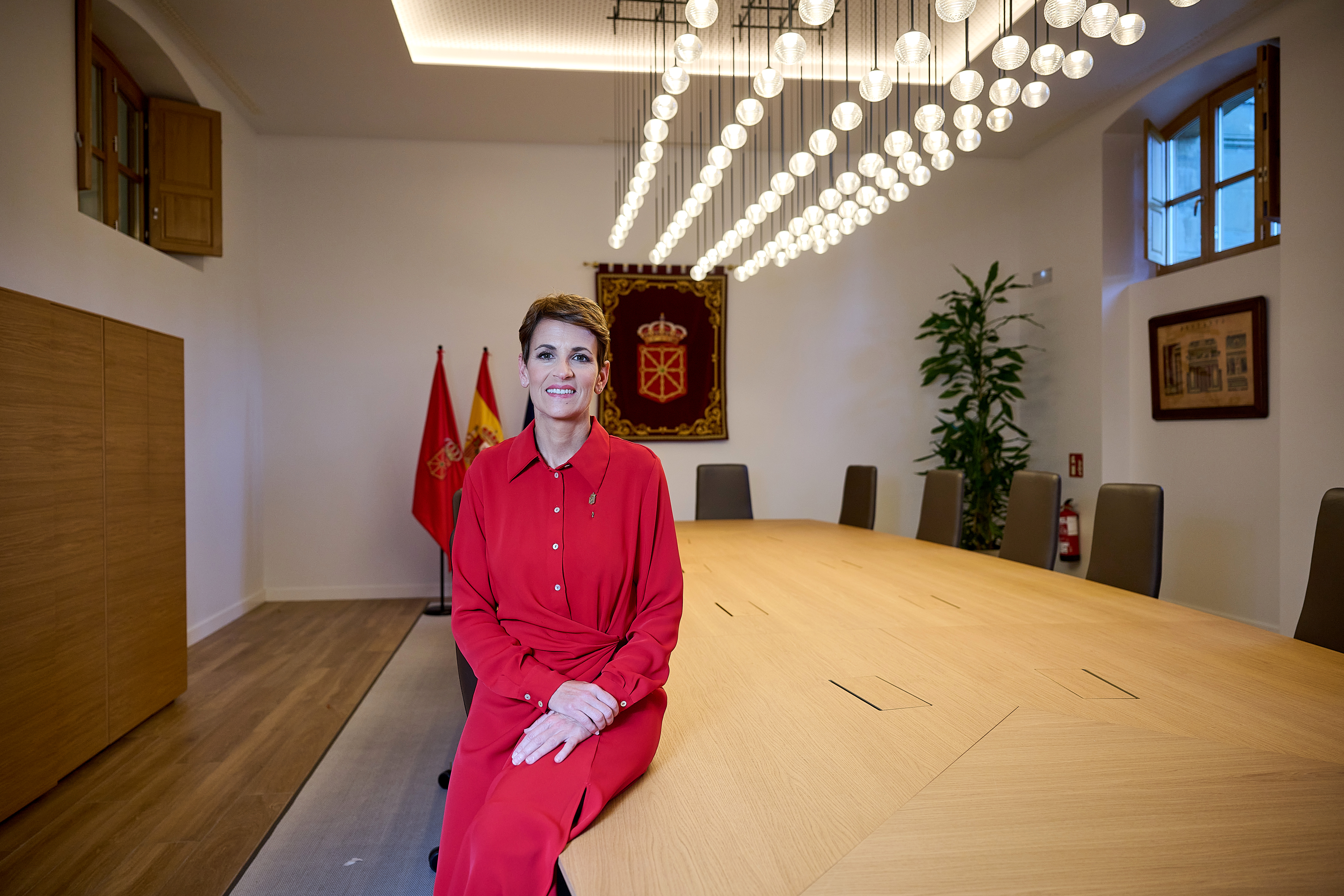
picture © Government of Navarra | President of Navarra
banner picture © PSOE | Eva Ercolanese